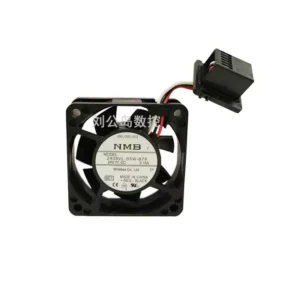
ABB 3HAC043383-001 Communication Board
$323.40
- Pricing: All prices are listed in U.S. dollars (USD).
- Secure Payments: We process payments securely through PayPal and Stripe.
- Free Shipping: Enjoy complimentary standard shipping within the United States (estimated delivery: 5–7 business days).
- International Shipping: For orders outside the U.S., please review our shipping policies for details.
The ABB 3HAC043383-001 Communication Board is a crucial component for industrial automation. Key features include high-speed data transfer, robust connectivity options (Ethernet, Serial), and compatibility with ABB robot controllers. It ensures seamless communication between various devices in your automation setup, optimizing performance and reliability.
The ABB 3HAC043383-001 Communication Board is a vital component designed to facilitate seamless and reliable communication within industrial automation systems. This board serves as a crucial link, enabling data exchange and control signals between various devices and controllers. Key specifications include support for multiple communication protocols such as Ethernet, Serial (RS-232, RS-485), and potentially fieldbus interfaces depending on the specific configuration. It is engineered for high-speed data transfer, minimizing latency and ensuring real-time responsiveness in demanding applications. The board features robust connectivity options, including multiple ports for connecting to different devices simultaneously. Its design prioritizes durability and reliability, withstanding harsh industrial environments and ensuring consistent performance over extended periods. The ABB 3HAC043383-001 is specifically designed for compatibility with a range of ABB robot controllers, including but not limited to the IRB series (e.g., IRB 120, IRB 140, IRB 1600, IRB 2600, IRB 4600, IRB 6640, IRB 6700). It may also be compatible with other ABB automation systems and PLCs, providing versatile integration options. This communication board is essential for optimizing the performance and efficiency of automated processes, enhancing productivity, and reducing downtime. It ensures reliable data transmission and control, contributing to the overall stability and effectiveness of the automation system.

 Shipping Options & Timeframes:
US / CA / AU / UK — Standard: FREE (Estimated 5–7 business days)
US / CA / AU / UK — Express: $15 (Estimated 3–4 business days)
Other countries: Flat-rate standard shipping and lead times vary by destination (see Shipping Policy for the full list).
Tracking: Provided after dispatch; delivery includes an order processing/dispatch window on business days.
Taxes & duties: Displayed/itemized at checkout; shipments are handled on a DDP basis per policy.